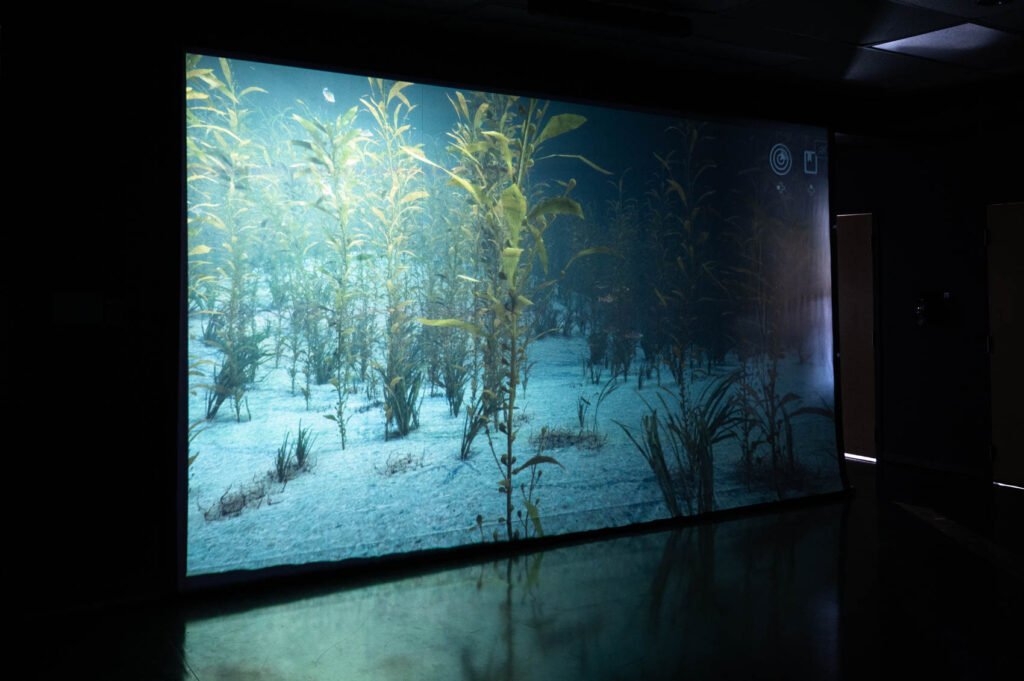
A 3D interactive experience revealing the hidden ecosystem beneath Okanagan Lake, made to challenge how we see the lake as an urban and recreational space.
DURATION:
September 2025 – April 2026
MAIN TOOLS USED:
Unity
Figma
Photoshop
Premiere Pro
PROJECT TYPE:
Interactive Installation
ABOUT THE PROJECT
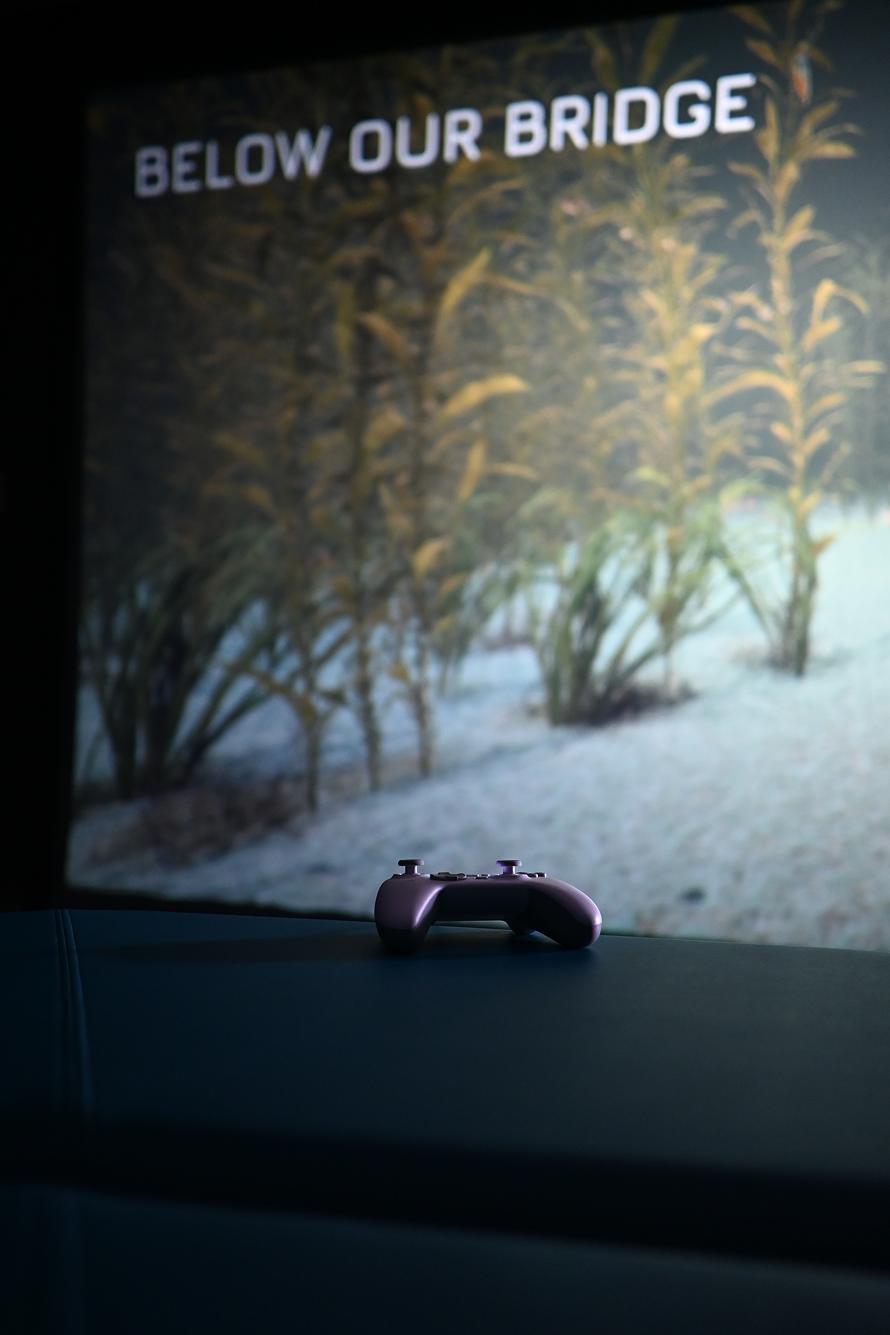
Below Our Bridge is an interactive digital installation created to encourage a deeper understanding of Okanagan Lake and the life that exists beneath its surface.
Located in the Okanagan Valley of British Columbia, Canada, Okanagan Lake is closely woven into the surrounding urban environment. In the summer, the lake is a popular destination for boating and other recreation, while roads and bridges carry traffic along and across it. With so much activity surrounding the water, it can be easy to think of the lake primarily as a recreational or urban space rather than as a living ecosystem.
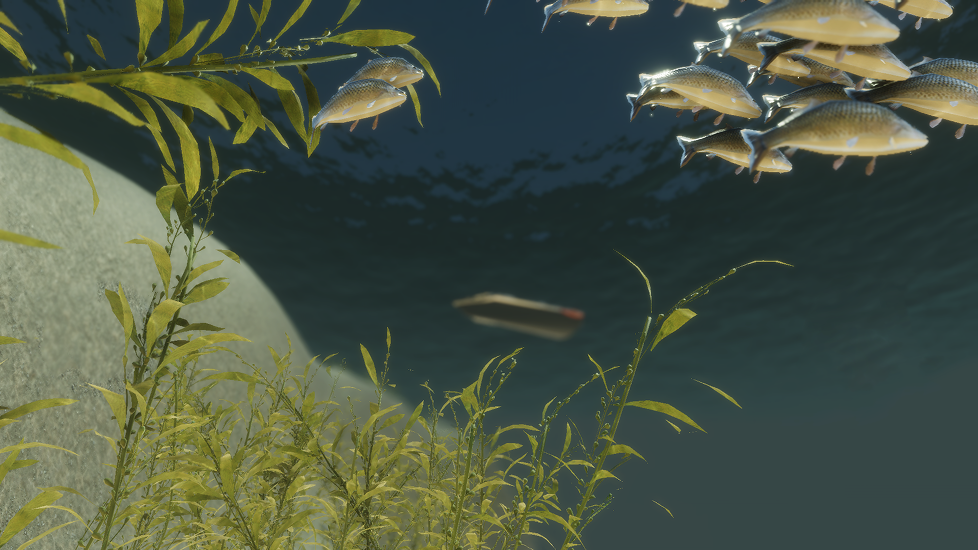
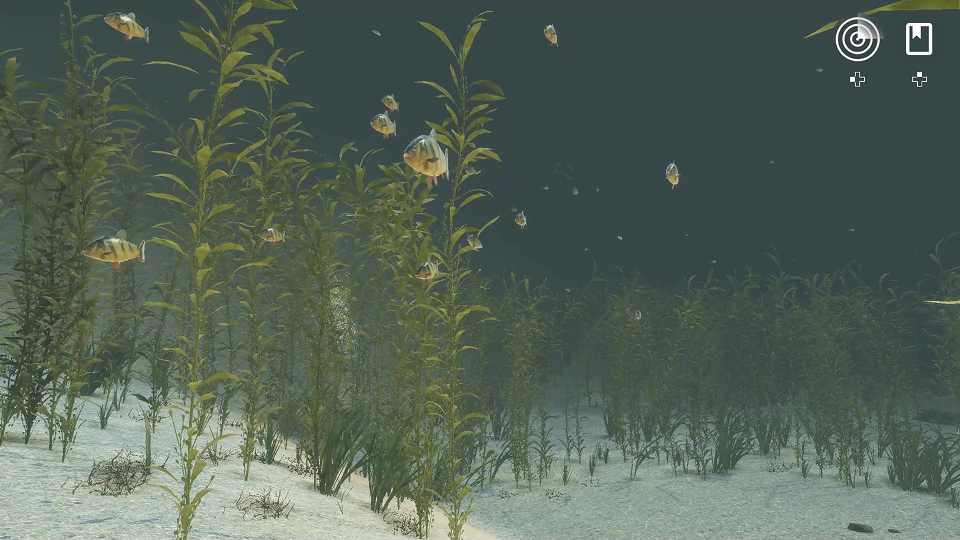
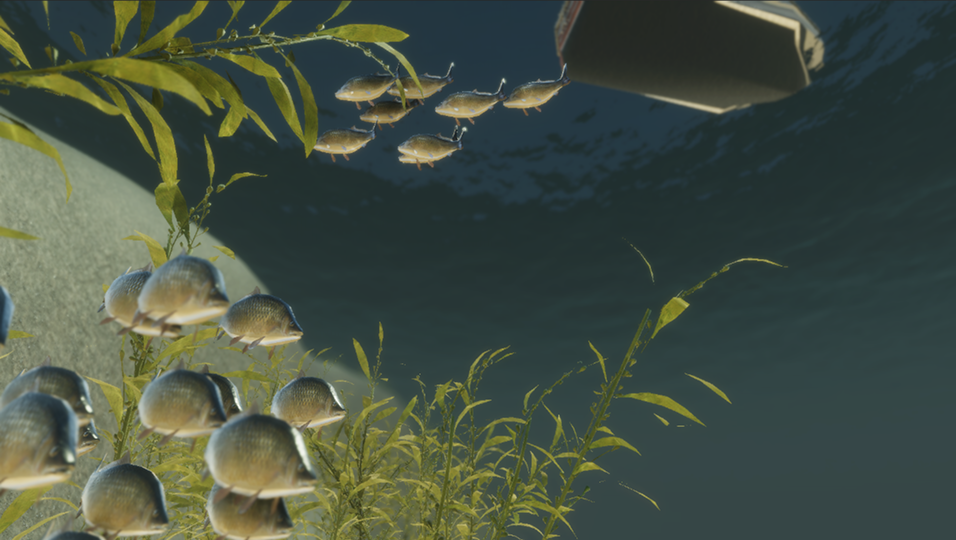
Built in Unity, Below Our Bridge shifts the viewer’s perspective below this familiar landscape. Visitors explore a lakebed inspired by Okanagan Lake, discovering local fish species and learning about their roles within the ecosystem through an in-game encyclopedia. By revealing what exists beneath the surface, the experience encourages viewers to consider the lake as an interconnected environment that exists alongside the city and the activities that take place above it.
The installation was exhibited as part of the Odds & Ends exhibition at the FINA Gallery.
ENVIRONMENT ART
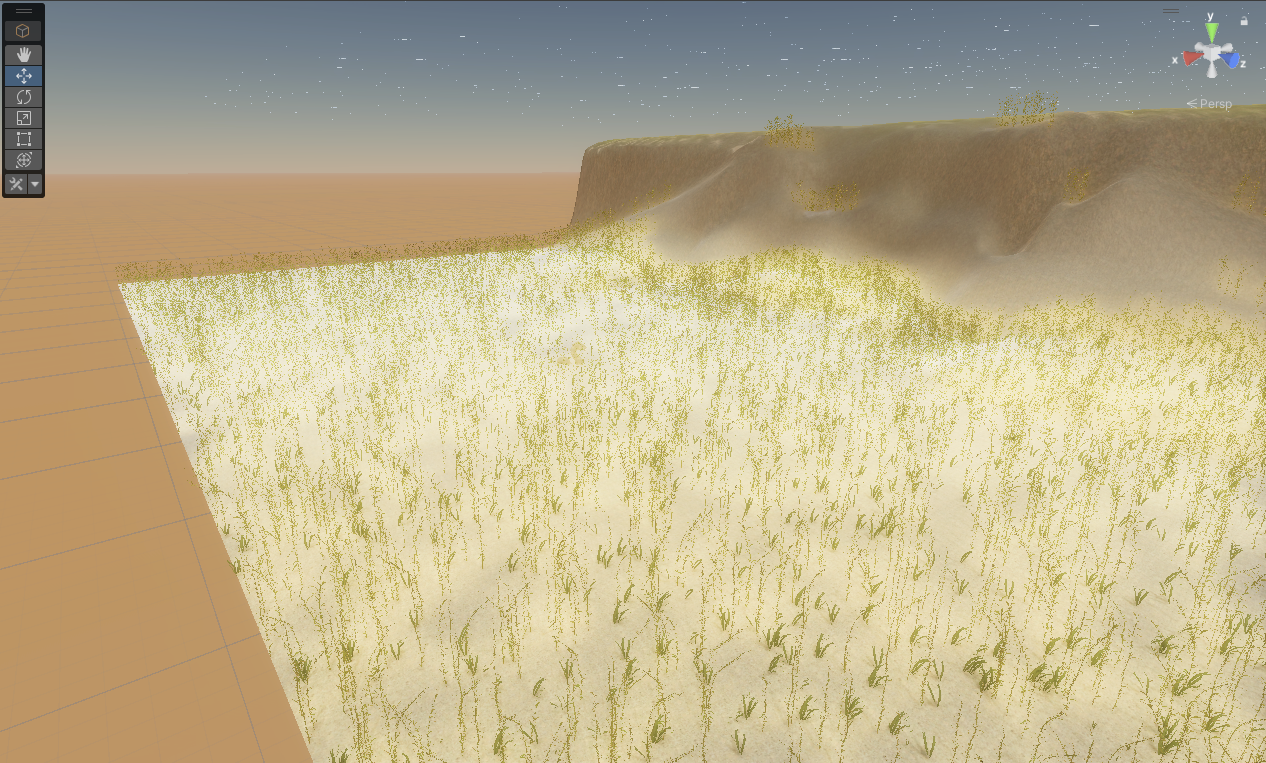
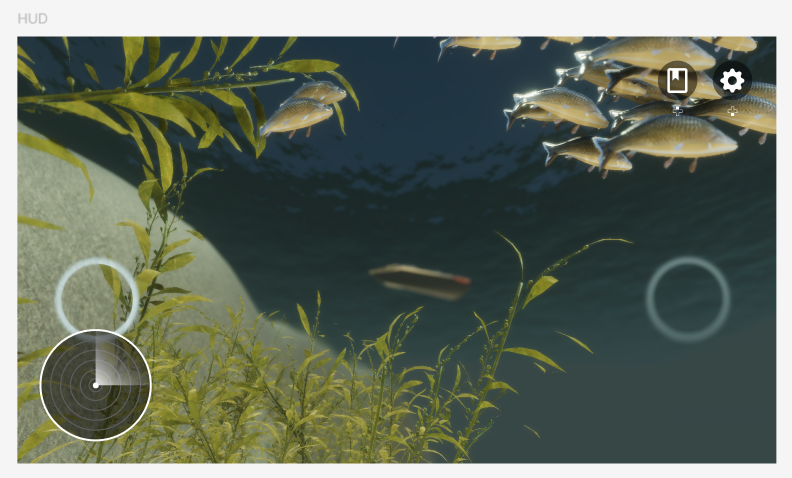
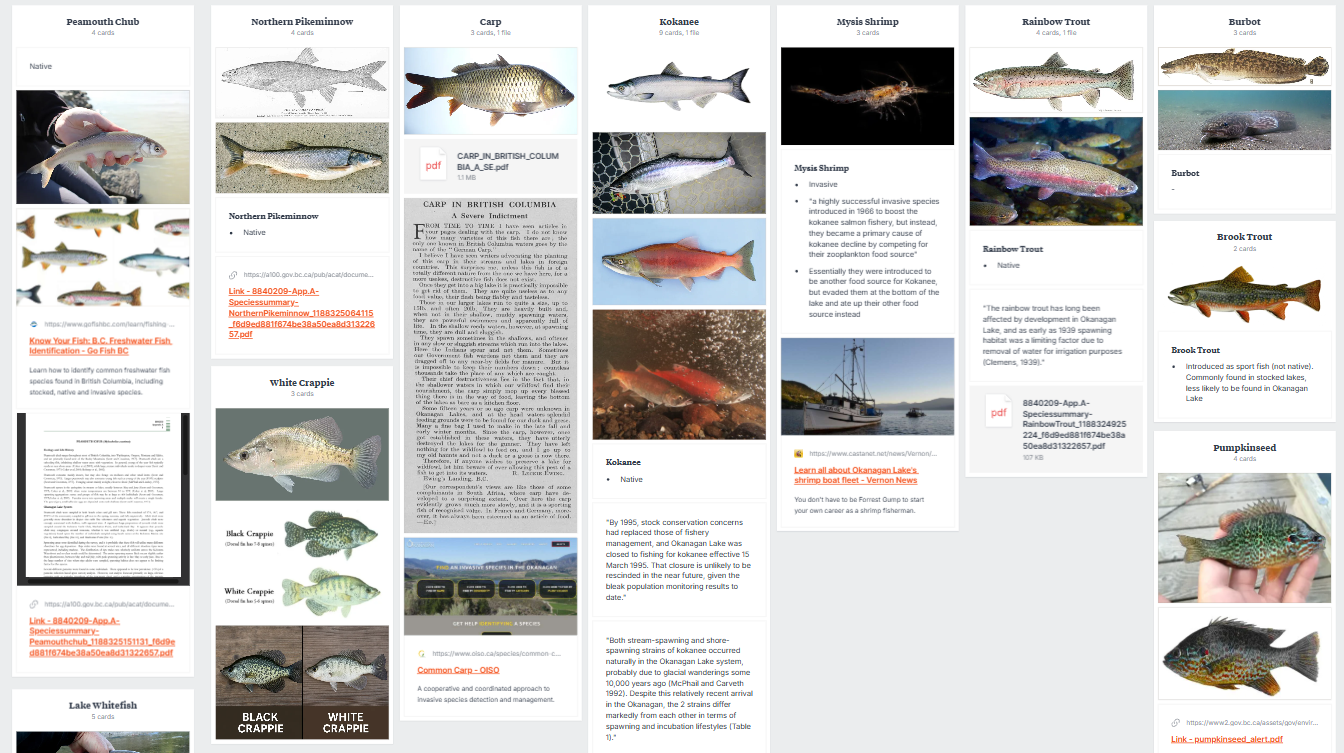
As part of a directed study with Dr. Aleksandra Dulic, I spent time at Okanagan Lake recording footage and gathering visual references for the environment. I used this footage as the starting point for sculpting and designing the 3D lakebed, while taking some creative liberties to make the environment more accessible to viewers.
For example, the water is much clearer than it would normally appear at depth, allowing visitors to see further into the lake and clearly observe the fish around them. This was an intentional design choice: rather than trying to perfectly recreate what someone would see underwater, I wanted to create an environment that could reveal parts of the lake that most people would never normally get to see.
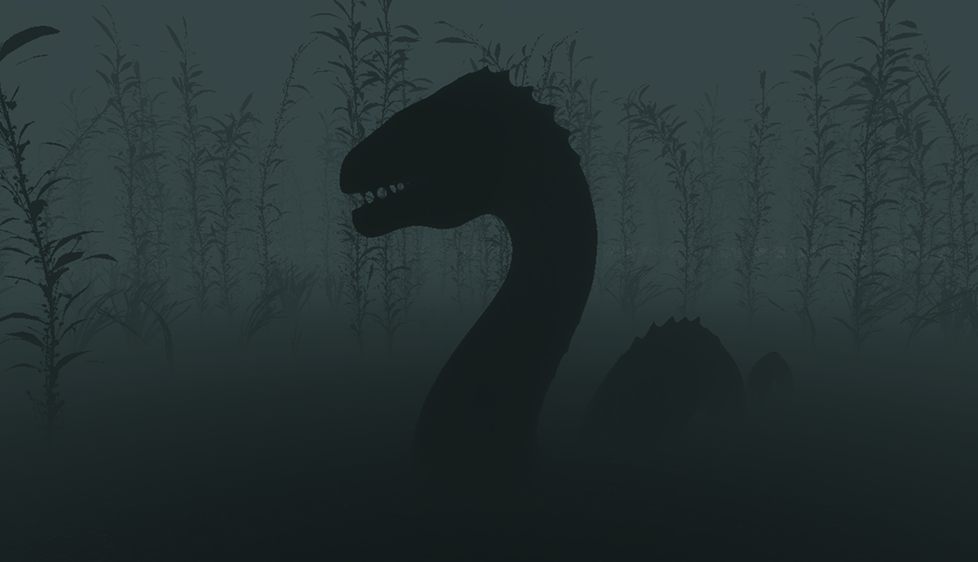
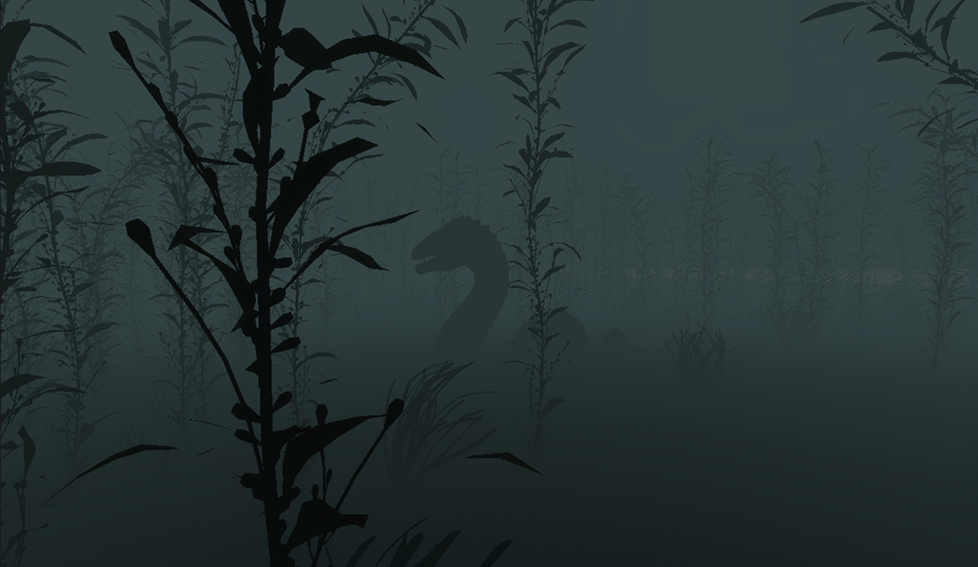
This approach also gave me room to incorporate the Ogopogo, a well-known local lake legend, into the environment. The creature appears as a mysterious silhouette when first discovered, encouraging the viewer to investigate, before revealing itself to be the statue that sits on the lakebed near Paul’s Tomb.
RETEXTURING MODELS
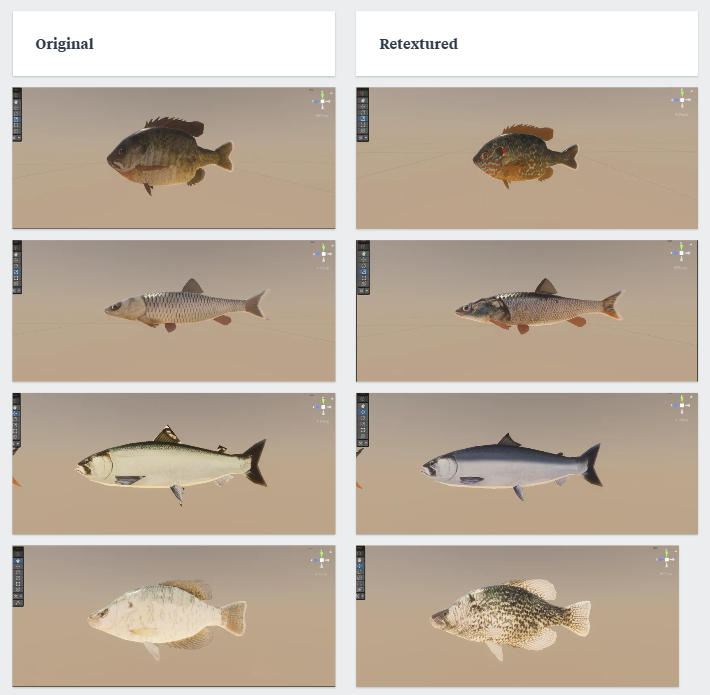
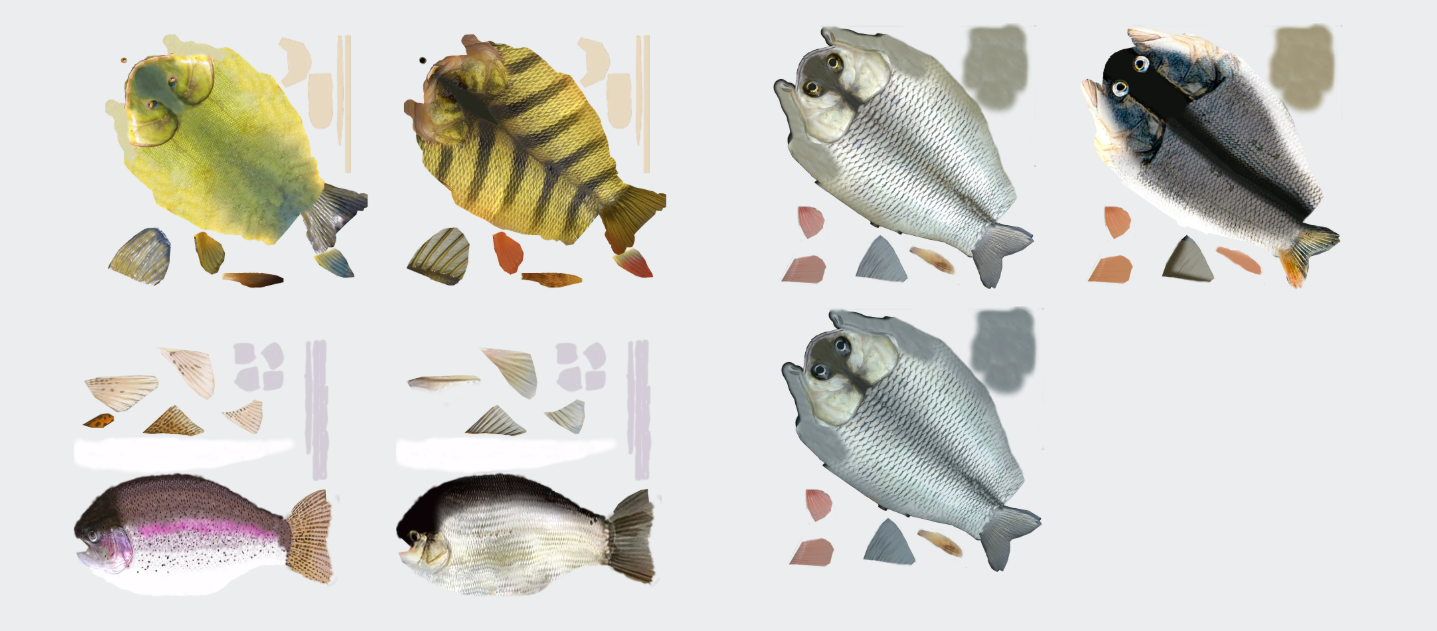
Finding ready-made 3D models of the specific fish species found in Okanagan Lake proved difficult, so I adapted existing models from the Unity Asset Store instead. Using a combination of photobashing and digital painting in Photoshop, I created new textures that more closely represented local species.
This allowed me to work within the project’s time and technical constraints while still creating fish that felt specific to the environment rather than relying on generic species.
UI DESIGN
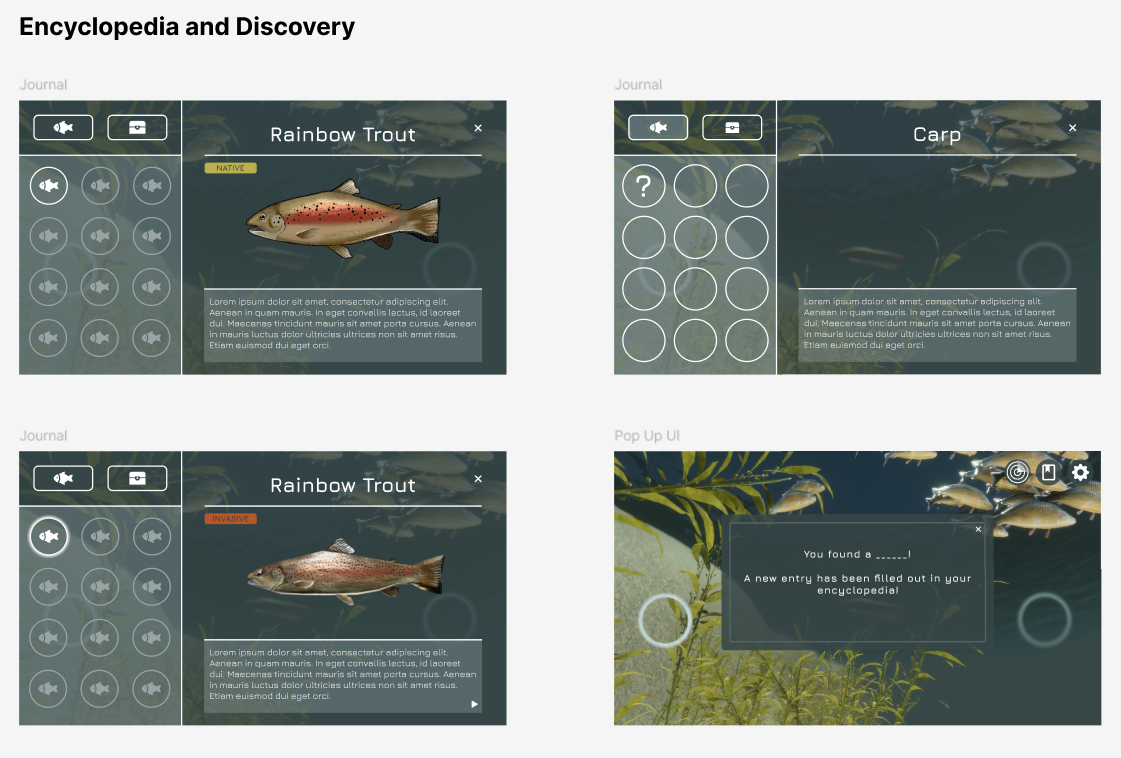
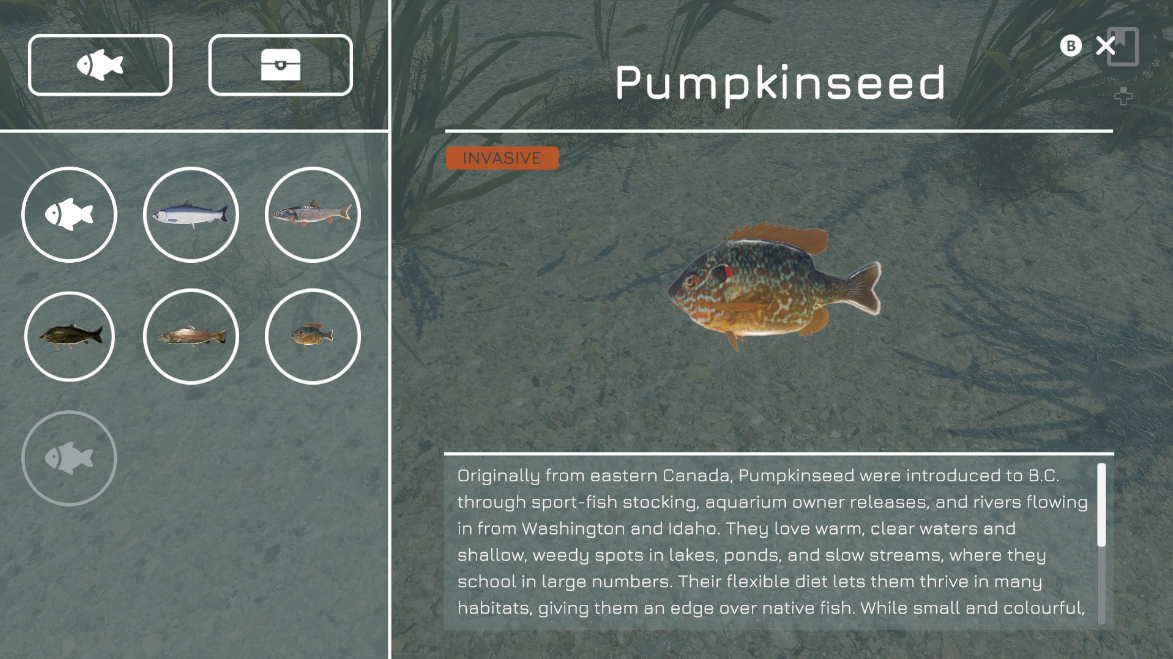
Discovery is at the heart of the experience, with viewers encouraged to find the different fish species hidden throughout the lake. I designed a journal-style encyclopedia where each discovered species receives its own entry, gradually filling out as the player explores.
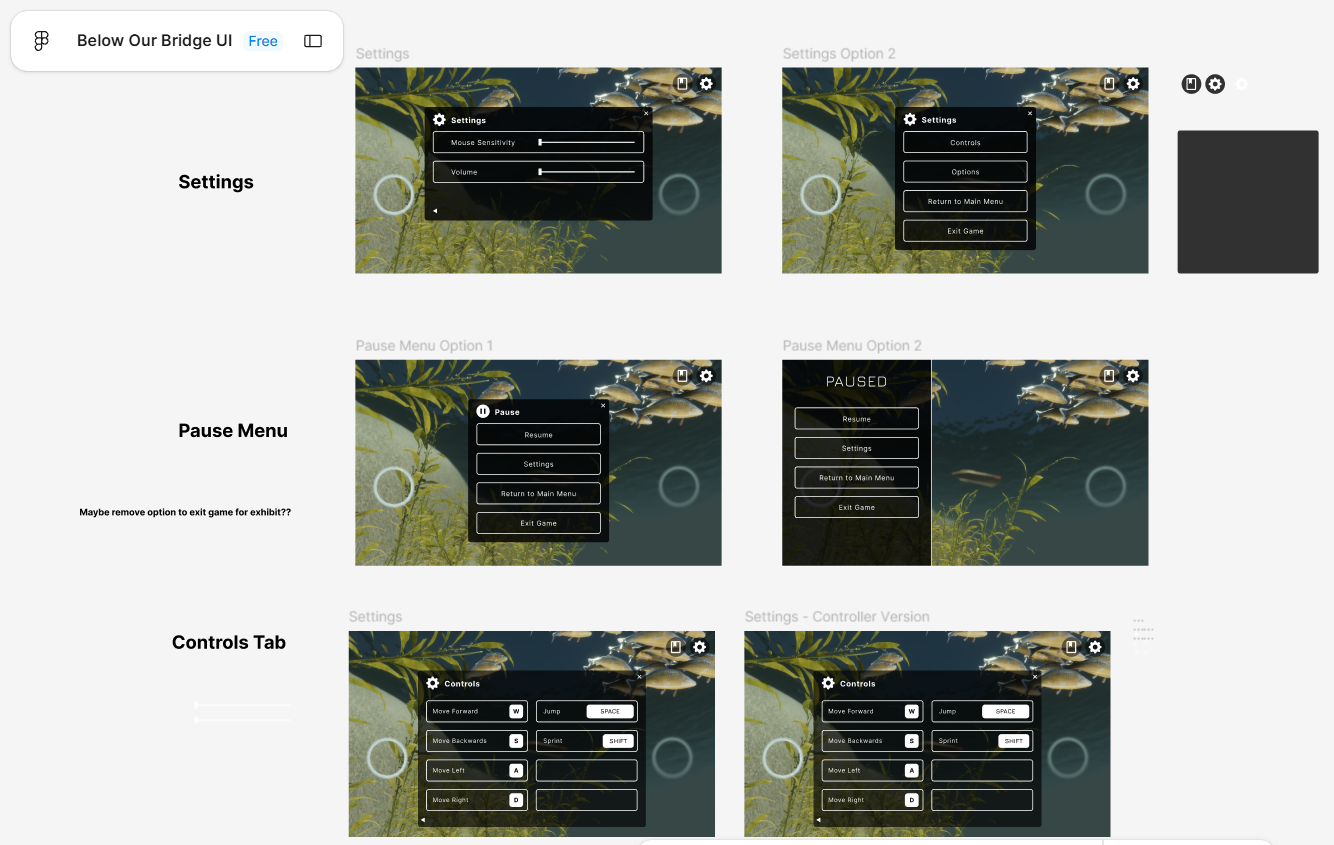
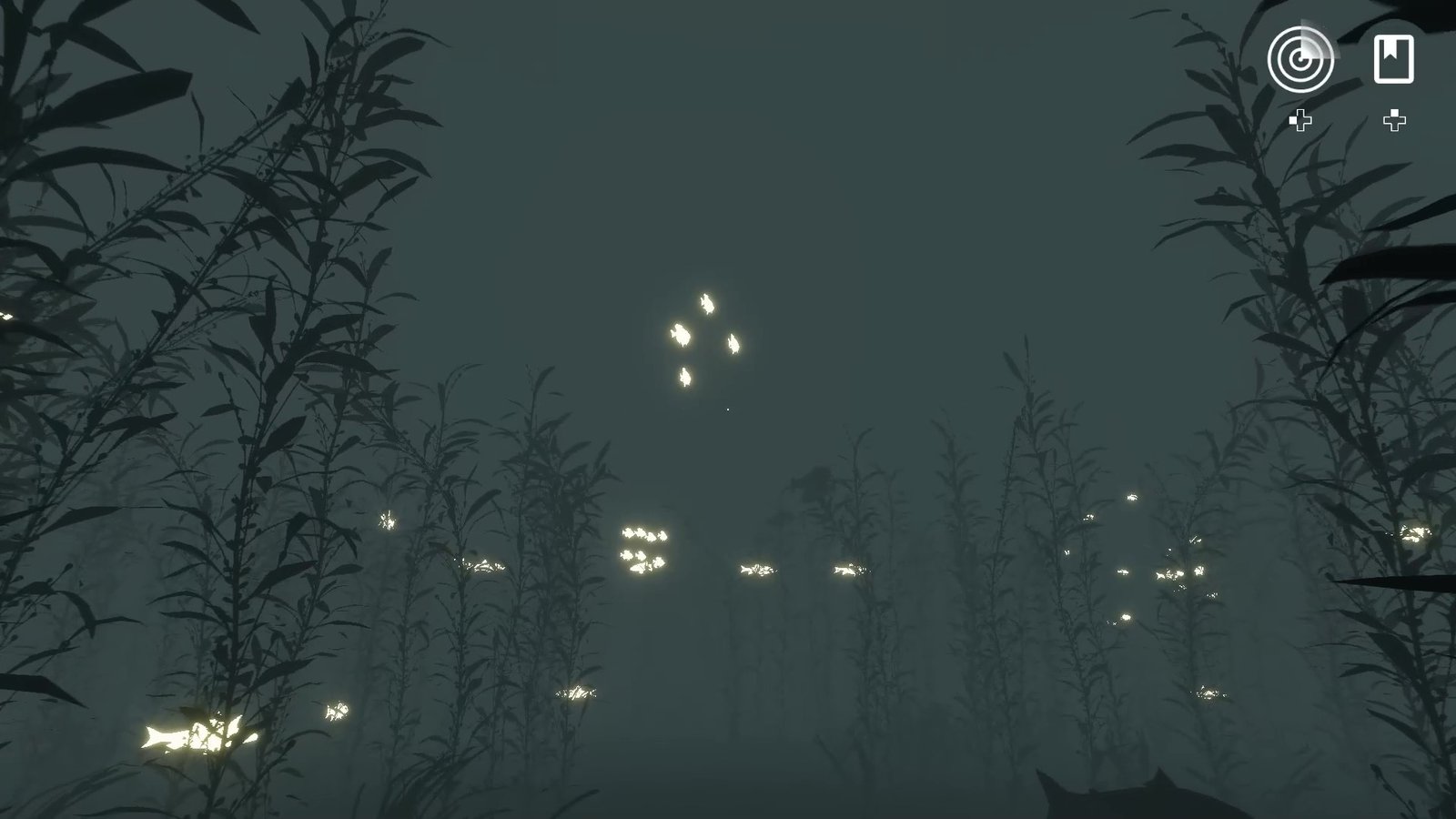
I also designed supporting interfaces for settings and pausing, as well as an early mini radar map intended to help viewers locate nearby fish. The radar ultimately wasn’t implemented, as I developed a different solution through the fish highlight mode.
DESIGNING FOR EXHIBIT SPACE
Because Below Our Bridge was created for an exhibition rather than a traditional game setting, I had to rethink some of the interactions and systems I would normally include. Features like pausing and manually exiting the experience were removed in favour of making the installation easier for visitors to approach and use independently.
I also designed the experience to reset itself. Once someone completes the game, it automatically restarts, while periods of inactivity trigger a reset if a visitor leaves partway through. This keeps the installation ready for the next person without requiring staff intervention.
The starting screen also acts as a small preview of the environment, with cameras continuously moving through the lake and fish flocks changing naturally each time. This helps the installation feel active even when nobody is currently interacting with it.
HIGHLIGHT MODE:
I created a fish highlight mode to help visitors find species they had not yet discovered. When activated, the environment is visually subdued while undiscovered fish are highlighted, giving viewers a clear way to continue their exploration without removing the sense of discovery from the main experience.
TOOLS & TECHNIQUES
Unity 3D & HDRP
Built the interactive environment and used Unity’s High Definition Render Pipeline to develop the visual style.
Unity Input System
Mapped keyboard and controller inputs for the exhibition setup.
Unity Terrain Tools
Sculpted the lakebed using footage and visual references gathered at Okanagan Lake.
Photoshop
Created and edited terrain textures and retextured existing 3D models to represent local fish species.
Figma
Designed the game’s interface, including the discovery journal and supporting menus.
Illustrator
Created and edited icons and other visual assets for the UI.
GAMEPLAY
This content is blocked because it would connect to YouTube.